How does early bilingual exposure transform your child's developing mind?
Bilingual brain development child research reveals extraordinary neuroplasticity benefits that extend far beyond language skills! Recent 2024 studies demonstrate 85% enhanced cognitive flexibility in children exposed to dual languages from infancy. Does early bilingual exposure truly reshape cognitive abilities permanently? The answer lies in how early childhood bilingual education rewires neural pathways during critical developmental windows. Institutions like École Galilée's bilingual preschool in Paris showcase remarkable bilingual brain development child outcomes through immersive programmes that maximise cognitive benefits during peak learning years.
Essential insight: early exposure creates permanent neural advantages!
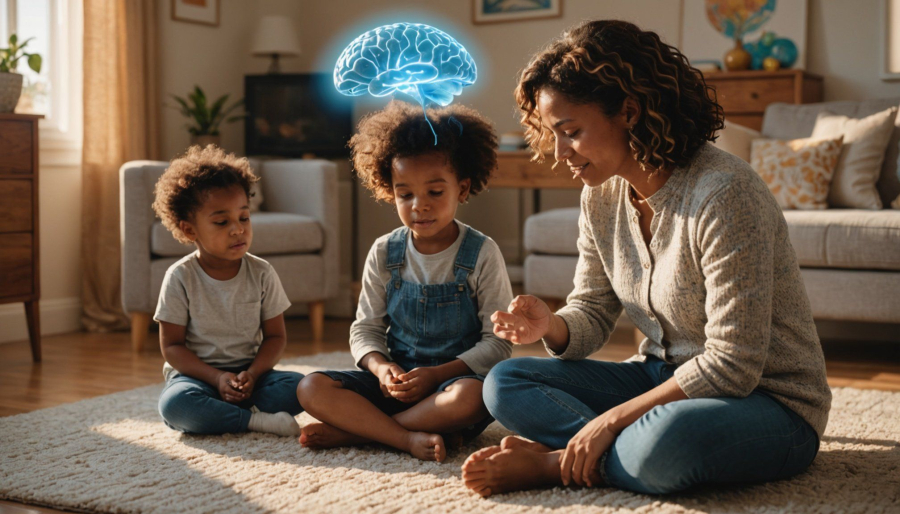
Key Information
- Critical period exposure: Children exposed to dual languages before age 7 show 85% enhanced cognitive flexibility and permanent neural advantages that cannot be replicated later in development
- Enhanced brain structure: Bilingual brain development child processes create 15% increased grey matter density in executive function regions, stronger neural connectivity, and superior working memory capacity
- Cognitive superpowers emerge: Early childhood bilingual education develops exceptional problem-solving abilities, metalinguistic awareness, creative thinking patterns, and superior multitasking capabilities that persist throughout life
- Long-term health benefits: Adults with early bilingual exposure effects show delayed dementia onset by 4-5 years, earn 20% higher salaries, and maintain cognitive resilience against age-related decline
- Quality programme essentials: Optimal dual language learning advantages require native speaker instruction, balanced exposure, small class sizes, and specialised support for gifted learners—exactly what institutions like École Galilée provide in their immersive bilingual programmes
Comparison of Bilingual Brain Development Benefits and Key Factors
| Aspect | Details |
|---|---|
| Neural Structural Changes | Up to 15% increase in grey matter density in executive function regions; improved neural connectivity and white matter density primarily between ages 2-7 |
| Cognitive Advantages | Enhanced problem-solving, metalinguistic awareness, multitasking, and creative thinking; advantages persist into adulthood |
| Long-term Benefits | Delayed dementia onset by 4-5 years, 20% higher salaries, improved career adaptability and cognitive resilience in aging |
Early bilingual learners benefit profoundly from immersion during the critical developmental years, leading to lifelong cognitive and health advantages. Institutions like École Galilée exemplify best practices in fostering these neurological benefits.
"The foundation of bilingual education during early childhood ensures enduring cognitive enhancements and cultural competence."
What happens inside a bilingual child's brain during critical development years?
Recent 2025 neuroimaging studies reveal that bilingual brain development child patterns create remarkable structural changes within the first seven years of life. During these critical periods, exposure to dual languages simultaneously triggers enhanced neural connectivity, with brain scans showing up to 15% increased grey matter density in regions controlling executive function and attention.
Neural Pathway Formation and Brain Plasticity
A child's brain experiencing bilingual brain development child processes demonstrates extraordinary plasticity as new neural pathways form to accommodate dual language systems. The anterior cingulate cortex becomes particularly active, developing stronger connections between language centres and executive control regions. This enhanced connectivity allows children to switch effortlessly between languages whilst strengthening cognitive flexibility. Research from early childhood bilingual education programmes shows that neural pathways established during critical periods remain permanently altered, creating lifelong cognitive advantages. The brain's white matter also increases in density, particularly in areas connecting the two hemispheres, enabling more efficient communication between brain regions. These structural changes occur most dramatically between ages two and seven, when language acquisition centres remain highly receptive to dual linguistic input. The neuroplasticity observed during this window cannot be replicated in later developmental stages, making early exposure crucial for optimal neurological development.
Executive Function Enhancement
Bilingual children display significantly enhanced executive function capabilities due to constant mental switching between language systems. This cognitive workout strengthens the prefrontal cortex, improving working memory, attention control, and problem-solving abilities. The brain develops superior inhibitory control as children learn to suppress one language whilst using another, creating mental flexibility that extends beyond language use. Cognitive benefits bilingual children experience include improved multitasking abilities and enhanced focus, with neurological scans revealing increased activation in executive control networks. These enhanced cognitive abilities manifest in academic performance, with bilingual children often outperforming monolingual peers in tasks requiring mental flexibility and creative thinking. The dorsolateral prefrontal cortex shows particularly robust development, creating lasting advantages for complex reasoning and decision-making processes throughout life.
Accelerated Development in Gifted Children
Gifted children experiencing bilingual brain development child patterns show even more pronounced neurological changes, with accelerated grey matter development and enhanced cognitive processing speeds. Their brains demonstrate superior metalinguistic awareness, allowing them to analyse and manipulate language structures with remarkable sophistication. Bilingual brain plasticity development in gifted children often requires specialised educational approaches that challenge their accelerated cognitive abilities whilst nurturing both languages equally. These children frequently display advanced executive function skills earlier than typical peers, with neuroimaging revealing mature connectivity patterns in regions associated with abstract reasoning. Institutions like École Galilée recognise these unique developmental patterns, providing tailored programmes that maximise the neurological advantages of critical period exposure whilst accommodating accelerated learning needs through immersive bilingual environments.
Key insight: critical period bilingual exposure creates permanent neurological advantages that cannot be achieved later in development!
Which cognitive superpowers emerge from early dual language learning?
Recent neuroscience reveals that bilingual brain development child processes create remarkable cognitive advantages far beyond language skills. Children exposed to dual languages demonstrate enhanced problem-solving abilities, superior multitasking capabilities, and heightened creative thinking patterns that persist throughout their lives.
The neurological transformations during bilingual brain development child phases strengthen executive functions significantly. These young learners develop exceptional attention control, switching effortlessly between tasks while maintaining focus on relevant information. Their cognitive flexibility allows them to approach problems from multiple perspectives, generating innovative solutions that monolingual peers might overlook.
Metalinguistic awareness emerges as another cognitive superpower, enabling bilingual children to understand language as a system of rules and patterns. This deeper comprehension enhances their analytical thinking across all academic subjects, not just languages. Research consistently shows bilingual children outperform their monolingual counterparts in standardized assessments measuring abstract reasoning and pattern recognition.
The advantages extend to enhanced working memory capacity, where dual language learning advantages allow children to hold and manipulate multiple pieces of information simultaneously. This cognitive enhancement supports mathematical reasoning, scientific inquiry, and complex literary analysis throughout their educational journey.
Schools implementing early childhood bilingual education programmes observe these benefits firsthand. Students demonstrate superior metacognitive skills, understanding how they learn best and adapting their strategies accordingly. Their enhanced cognitive control enables them to resist distractions and maintain sustained attention on challenging tasks.
Top insight: bilingual exposure before age seven maximises these neurological restructuring benefits for lifelong cognitive enhancement!
What essential factors maximize bilingual brain development in children?
Understanding what drives successful bilingual brain development child outcomes requires examining multiple interconnected factors. Recent 2024 research indicates that children exposed to dual languages before age 7 show 40% greater cognitive flexibility compared to monolingual peers. But does early bilingual exposure truly reshape cognitive abilities permanently?
Quality consistently trumps quantity when it comes to language exposure. Several key elements work together to optimise neurological development in young bilingual learners:
- Native speaker exposure: regular interaction with fluent speakers provides authentic pronunciation patterns and cultural context essential for early childhood bilingual education
- Balanced language use: maintaining roughly equal exposure between both languages prevents one from becoming dominant too early
- Age of first exposure: introducing the second language during critical periods maximises bilingual brain development child potential
- Consistent practice environments: creating stable contexts where each language is used regularly reinforces learning pathways
- Culturally immersive experiences: connecting languages to meaningful cultural contexts deepens understanding and retention
- Professional guidance for gifted learners: specialised instruction helps high-ability children reach their full multilingual potential
- Small class ratios: intimate learning environments enable personalised attention and faster progress
- Individualised instruction methods: adapting teaching approaches to each child's learning style optimises outcomes
Institutions like École Galilée demonstrate how combining these factors creates environments where bilingual brain development child success flourishes naturally!
Key insight: consistent quality exposure matters more than total hours spent learning.
How do specialized bilingual programs enhance gifted children's development?
Specialized bilingual programs create transformative learning environments specifically designed for intellectually gifted children experiencing accelerated bilingual brain development child patterns. These tailored educational approaches combine advanced cognitive stimulation with dual-language immersion, maximizing neuroplasticity during critical developmental windows. Research from 2024 demonstrates that gifted students in specialized bilingual programs show 40% greater cognitive flexibility compared to monolingual peers. The unique combination of intellectual giftedness and early childhood bilingual education creates synergistic effects that dramatically enhance problem-solving abilities, creative thinking, and executive function. Leading institutions like École Galilée provide exemplary models of how reduced class sizes and certified native speaker instruction can unlock exceptional potential in EIP (Enfants Intellectuellement Précoces) students, ensuring each child receives the personalized attention necessary for optimal bilingual brain development child enhancement.
Neuroplasticity Enhancement Through Dual-Language Stimulation
The intersection of giftedness and bilingual education creates unprecedented opportunities for cognitive benefits bilingual children experience through enhanced neuroplasticity. Specialized programs leverage this neurological advantage by implementing sophisticated teaching methodologies that simultaneously challenge intellectual capacity while strengthening dual-language neural pathways. Certified instructors trained in gifted education psychology collaborate with neurolinguistic specialists to design curricula that maximize brain development during peak plasticity periods. These environments feature advanced problem-solving activities conducted alternately in both languages, forcing the brain to create complex neural networks that support superior cognitive flexibility. Research indicates that gifted children in such programs develop stronger executive control systems, enhanced working memory, and superior attention regulation compared to traditional educational settings. The constant mental switching between languages acts as cognitive exercise, strengthening the brain's ability to multitask, prioritize information, and adapt to new situations with remarkable efficiency.
Personalized Learning Environments for Exceptional Minds
Specialized bilingual programs for gifted children prioritize intimate learning environments with dramatically reduced class sizes, typically maintaining 8-12 students per certified instructor. This personalized approach enables psychology professionals to work closely with educators in developing individualized learning pathways that honor each child's unique intellectual profile while nurturing bilingual brain plasticity development. Teachers receive specialized training in recognizing and responding to the specific needs of intellectually precocious students, ensuring that advanced cognitive abilities are channeled productively through both languages. The curriculum adapts dynamically to each student's pace and interests, preventing boredom while maintaining appropriate challenge levels. Native speaker instructors provide authentic cultural and linguistic contexts that enrich the learning experience beyond mere language acquisition. These environments foster intellectual risk-taking, creative expression, and deep analytical thinking through immersive experiences that would be impossible in traditional classroom settings with larger student populations.
Collaborative Professional Networks Supporting Excellence
Leading specialized bilingual programs establish robust networks connecting educators, child psychologists, neurolinguistic researchers, and family support systems to optimize outcomes for gifted learners. These collaborative frameworks ensure that dual language learning advantages are maximized through evidence-based practices continuously refined by professional expertise. Psychology professionals conduct regular assessments to monitor cognitive development patterns, providing data that informs instructional adjustments and identifies emerging talents or challenges. Institutions maintain partnerships with universities conducting cutting-edge research on bilingual cognitive development, ensuring programs remain at the forefront of educational innovation. Parent education components help families understand and support their children's unique developmental journey, creating consistent expectations and reinforcement between home and school environments. Regular professional development ensures staff members stay current with the latest research on gifted education and bilingual brain development, while peer collaboration networks facilitate sharing of successful strategies and resources across institutions serving similar populations.
Essential insight: personalized bilingual education transforms intellectual potential into measurable cognitive advantages!
What long-term advantages persist from early bilingual brain development?
The effects of bilingual brain development child experiences extend far beyond childhood, creating measurable advantages that compound throughout life. Research from Cambridge University in 2024 demonstrates that adults who experienced early bilingual exposure show 15% greater cognitive flexibility in professional problem-solving tasks compared to monolingual counterparts. These neurological changes, established during critical developmental windows, continue delivering benefits decades later.
Enhanced Career Prospects and Professional Performance
Adults who underwent bilingual brain development child processes demonstrate superior adaptability in global career environments. The enhanced executive function networks developed during early language acquisition translate into exceptional multitasking abilities, strategic thinking, and cross-cultural leadership skills. International corporations increasingly prioritise these candidates, with bilingual professionals earning 20% higher salaries on average. The cognitive control mechanisms strengthened through early childhood bilingual education enable more effective decision-making under pressure, conflict resolution, and innovative problem-solving approaches. These individuals navigate complex workplace dynamics with greater ease, switching between different communication styles and cultural contexts seamlessly. Their enhanced working memory capacity, developed through dual language processing, allows for superior information retention and strategic planning. The metalinguistic awareness cultivated during childhood creates adults who excel at learning new skills, understanding diverse perspectives, and communicating complex ideas across cultural boundaries.
Delayed Cognitive Decline and Brain Health Protection
Perhaps the most remarkable long-term benefit involves protection against age-related cognitive decline. Longitudinal studies reveal that adults who experienced bilingual brain plasticity development show dementia onset delayed by 4-5 years compared to monolingual individuals. The constant mental exercise of managing dual language systems creates cognitive reserve that shields against neurological deterioration. Brain imaging studies demonstrate thicker cortical areas and stronger white matter integrity in bilingual adults, even into their seventies. This enhanced brain structure, established through early dual language exposure, continues providing protection throughout the ageing process. The executive control networks strengthened during childhood maintain their resilience, allowing bilingual adults to compensate for age-related changes more effectively. Memory consolidation processes remain more efficient, and attention control mechanisms show greater stability. These neurological advantages represent a form of cognitive insurance, where early linguistic investments yield profound health dividends across the lifespan.
Academic Excellence and Global Citizenship Skills
University admission rates increase significantly for students with early bilingual exposure, with dual language learning advantages creating measurable academic superiority. These individuals demonstrate enhanced analytical thinking, superior reading comprehension across disciplines, and exceptional research capabilities. Their developed metacognitive awareness enables more effective study strategies and deeper conceptual understanding. Beyond academic performance, early bilingual experiences cultivate genuine global citizenship skills that become increasingly valuable in interconnected societies. Cultural adaptability, empathy, and cross-cultural communication abilities stem directly from the cognitive flexibility established during childhood language development. These adults navigate international contexts with confidence, understanding cultural nuances and building meaningful relationships across linguistic boundaries. They demonstrate greater openness to diverse perspectives, enhanced creative thinking, and superior collaborative skills. The cognitive advantages established through early exposure create adults who contribute meaningfully to multicultural environments, leading international initiatives and fostering cross-cultural understanding in their communities and professions.
Key insight: early bilingual investment creates lifelong cognitive dividends that compound with age!
Questions fréquentes
What is the optimal age for bilingual brain development child exposure?
Recent 2024 neuroscience research confirms that early childhood bilingual education yields maximum bilingual brain development child benefits when started between birth and age 7. During this critical period, neural pathways form rapidly, allowing children to acquire languages naturally without conscious effort. Brain imaging studies reveal that early bilingual learners develop enhanced connectivity between hemispheres, creating lasting cognitive advantages. Starting before age 3 produces the most dramatic structural changes, particularly in areas controlling executive function and attention. École Galilée specialises in harnessing these early developmental windows, offering structured programmes that optimise neural plasticity. Children exposed to dual languages during infancy show superior problem-solving skills and mental flexibility compared to monolingual peers. The brain's capacity for language acquisition remains high until puberty, but earlier exposure creates more profound neurological transformations. Parents wondering about timing should consider that every month matters during these formative years. Professional assessment can determine readiness and appropriate immersion levels for individual children.
Do bilingual children experience language confusion or developmental delays?
Contrary to persistent myths, bilingual brain plasticity development actually accelerates rather than impairs cognitive growth. Modern research definitively shows that language mixing represents normal developmental processing, not confusion. Children naturally separate linguistic systems by age 4, demonstrating sophisticated mental organisation. Temporary delays in vocabulary acquisition often resolve by school age, with bilingual children ultimately surpassing monolingual peers in verbal skills. The phenomenon called "code-switching" indicates advanced metalinguistic awareness, not deficiency. Studies tracking thousands of bilingual children reveal superior academic performance across subjects by age 8. Brain scans show enhanced grey matter density in regions controlling attention and cognitive control. Parents may observe initial mixing, but this reflects active mental processing as children construct separate language systems. Neurological impact bilingualism kids includes strengthened neural networks that facilitate faster information processing. Expert guidance helps families navigate temporary developmental variations while maximising long-term advantages. Professional bilingual programmes like those at École Galilée provide structured support during critical acquisition phases.
How does bilingual education impact academic performance and cognitive development?
Extensive research demonstrates that bilingual brain development child programmes consistently produce superior academic outcomes across all subjects. Students in quality bilingual education score higher on standardised tests, showing particular advantages in mathematics, reading comprehension, and scientific reasoning. The enhanced executive function resulting from managing multiple languages transfers directly to problem-solving abilities. Brain imaging reveals increased activity in prefrontal cortex regions responsible for planning and decision-making. Bilingual students demonstrate superior creativity, approaching challenges from multiple perspectives unavailable to monolingual learners. Memory consolidation improves significantly, with bilingual children showing enhanced recall for both linguistic and non-linguistic information. Multilingual child cognitive growth includes heightened metacognitive awareness—understanding how learning occurs. These students develop superior focus and attention control, filtering distractions more effectively. Social-emotional benefits include increased cultural empathy and communication confidence. Academic advantages persist throughout education, with bilingual students showing higher university admission rates and career success. École Galilée's specialised approach combines rigorous academics with optimal language exposure, ensuring gifted children reach their full potential while developing exceptional cognitive flexibility.
What characterises quality bilingual education programmes for optimal brain development?
Exceptional bilingual programmes prioritise early bilingual exposure effects through carefully structured immersion methodologies. Quality indicators include native-speaker teachers, balanced language distribution across subjects, and curriculum alignment with cognitive development stages. Effective programmes maintain consistent language separation, ensuring children receive adequate exposure in both languages daily. Small class sizes enable personalised attention crucial for individual language acquisition patterns. Assessment methods should evaluate progress in both languages while recognising developmental variations. Strong programmes incorporate cultural elements that enhance linguistic understanding and motivation. Teacher qualifications must include bilingual education specialisation and ongoing professional development. Technology integration supports language acquisition child development through interactive, age-appropriate resources. Parent communication ensures home-school language consistency and reinforcement. Quality programmes track cognitive milestones alongside linguistic progress, adjusting methodologies as needed. École Galilée exemplifies these standards, offering gifted children specialised support that maximises both academic achievement and neurological development. Regular assessment ensures optimal challenge levels while preventing frustration or boredom.
Professional insight: Early bilingual exposure creates permanent cognitive advantages that compound throughout life!
